
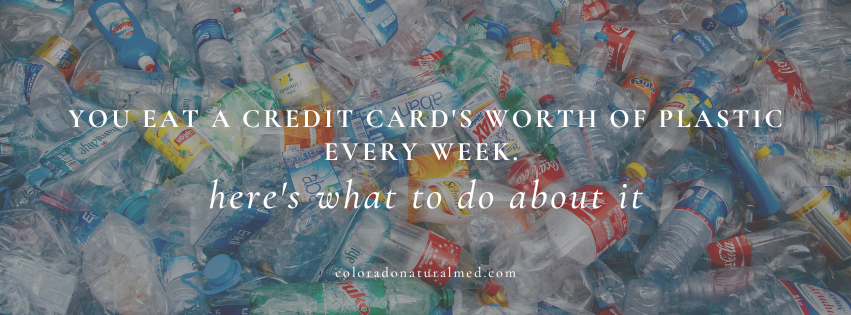
What the science actually says about microplastics in the human body – and what naturopathic medicine, functional testing, lymphatic support, and acupuncture can do about it.
In early 2024, researchers published a study that stopped a lot of people mid-scroll.
They found microplastics and nanoplastics inside human heart tissue. In arterial plaque. In the bloodstream. In the lungs, the liver, the kidneys, the brain. In placentas. In breast milk. In the testicles.
Everywhere they looked, they found plastic.
The average person is now estimated to consume approximately five grams of microplastics per week – roughly the weight of a credit card – through water, food, air, and the countless products that have become inseparable from daily life.
For most people, the response to this information has been somewhere between quiet dread and resigned helplessness. If it’s already everywhere – in the air you breathe, the water you drink, the food you eat, the containers you heat – what exactly are you supposed to do about it?
That is the question worth answering. And it’s the one that is almost never asked after the alarming headline.
This is our attempt at a more useful conversation.
What Microplastics Actually Are
Microplastics are fragments of plastic smaller than five millimeters – the breakdown products of the roughly 400 million tons of plastic produced globally every year. Nanoplastics are even smaller, measured in nanometers, small enough to cross the blood-brain barrier, enter individual cells, and pass through the placenta into developing fetuses.
They come from everywhere: plastic water bottles and food containers, synthetic clothing releasing fibers when washed, plastic packaging heated in microwaves, non-stick cookware, plastic tea bags steeped in boiling water, synthetic carpets and furniture, vehicle tire wear, and the air itself in densely populated areas.
They are not going away. And the human body – which evolved over millions of years to process organic compounds, not petrochemicals – has no established pathway for eliminating them efficiently.
Which does not mean the body is helpless. It means we have to be more intentional about supporting the systems that do the work.
What the Research Is Showing
The science on microplastics is moving fast – faster than most clinical guidance has kept up with. Here is what the current evidence is showing:
Cardiovascular risk. A landmark 2024 study published in the New England Journal of Medicine found that people with microplastics and nanoplastics in their arterial plaque had a significantly higher risk of heart attack, stroke, and death compared to those without detectable levels. This was not a small finding. It was one of the first studies to directly link microplastic accumulation to hard clinical outcomes.
Inflammation and immune dysregulation. Microplastics appear to trigger chronic inflammatory responses in tissues where they accumulate. They have been associated with oxidative stress – the same mechanism underlying cardiovascular disease, cancer, neurodegeneration, and accelerated aging. The immune system recognizes plastic particles as foreign and mounts a response that, when sustained over years, contributes to the low-grade chronic inflammation now understood to underlie most modern chronic disease.
Hormonal disruption. Many plastics contain or leach endocrine-disrupting chemicals – BPA, phthalates, PFAS – that interfere with estrogen, testosterone, thyroid hormones, and cortisol. These chemicals bind to hormone receptors and alter signaling in ways that affect fertility, metabolism, mood, weight regulation, and immune function. Microplastic particles themselves may carry these chemicals into tissues where they would not otherwise penetrate.
Gut microbiome disruption. Research suggests that microplastics alter the composition of the gut microbiome – reducing microbial diversity, promoting inflammatory bacterial strains, and compromising the integrity of the gut lining. Given the gut’s central role in immune regulation, mood, metabolism, and systemic inflammation, this is not a peripheral concern.
Neurological impact. Nanoplastics are small enough to cross the blood-brain barrier. Early research is showing associations between plastic accumulation and neuroinflammation – a mechanism implicated in cognitive decline, depression, and neurodegenerative disease. The research is early but the direction is concerning enough to warrant attention.
None of this is meant to be alarming for the sake of alarming. It is meant to provide an honest picture of what the science is showing – so that the response can be proportionate and practical rather than paralyzed.
What Your Body Is Already Doing
Before we talk about what you can do, it’s worth acknowledging what your body is already doing.
The liver, the kidneys, the gut, the lymphatic system, and the skin are all active participants in the body’s detoxification and elimination processes. They were not designed with microplastics in mind – but they are the systems we have, and supporting them is both the most logical and the most evidence-based intervention available.
In East Asian medicine, this aligns with a framework that has guided clinical practice for millennia: when the body’s ability to process and eliminate what it takes in is supported – when qi flows freely, when the liver and lymph are not congested, when the gut is functioning – the body’s innate resilience is maximized. That framework is more relevant now than it has ever been.
The goal is to support function.
What You Can Actually Do
There are two levels of response here: what you can control in your environment and what you can do to support your body’s capacity to process what it’s already been exposed to.
Reducing Exposure – The Practical Reality
You cannot eliminate microplastic exposure. But you can meaningfully reduce it. The highest-leverage changes are:
Water. Filtered water consistently shows lower microplastic concentrations than bottled water – which is one of the highest sources of exposure due to the leaching of plastic from the bottle itself. A quality home water filter – reverse osmosis is among the most effective – is one of the single highest-impact changes you can make.
One important note: reverse osmosis removes microplastics effectively but also strips beneficial minerals from the water. Adding a remineralization filter or trace mineral drops restores what the filtration process removes. The complete recommendation is filter and remineralize.
Food storage and preparation. Avoid heating food in plastic containers. Switch to glass, stainless steel, or ceramic for storage and cooking. Plastic tea bags, plastic-lined coffee cups, and plastic cutting boards that show knife marks are all significant sources of exposure during food preparation.
Plastic cooking utensils are another significant and frequently overlooked source. A single plastic spatula used with heat can release millions of microplastic particles into food during cooking. Switching to wood, stainless steel, or silicone utensils is a simple, permanent upgrade.
Air quality. Indoor air often has higher microplastic concentrations than outdoor air due to synthetic carpets, furniture, and fabrics. HEPA air filtration, regular vacuuming, and increasing ventilation are practical reductions. Synthetic clothing – particularly fleece and polyester – releases significant microfibers during washing; washing bags designed to capture fibers are available and effective.
Food choices. Sea salt, canned goods, fish – particularly filter feeders like mussels – and processed foods packaged in plastic are among the highest dietary sources. Choosing fresh, whole foods and minimizing plastic-packaged and ultra-processed products reduces both microplastic exposure and the overall inflammatory load the body is managing.
Supporting Your Body’s Capacity to Process What It’s Already Carrying
This is where naturopathic medicine has the most to offer – and where the conversation almost never goes after the alarming headline.
Liver support. The liver is the body’s primary filtration system. Supporting phase I and phase II liver detoxification through targeted nutrition – cruciferous vegetables, adequate protein, bitter greens, specific botanicals – and reducing the overall toxic load gives the liver more capacity to process what it’s carrying. Functional testing can assess liver detoxification markers and identify where the process is getting stuck.
Lymphatic support. The lymphatic system is the body’s waste removal network – and one of the most overlooked. Unlike the cardiovascular system, the lymph has no pump. It moves through movement, breath, and manual stimulation. Lymphatic drainage massage, dry brushing, consistent physical movement, and adequate hydration all support lymphatic flow. When the lymph is congested, the body’s ability to clear cellular waste – including inflammatory debris – is significantly compromised. Supporting lymph is one of the most direct things you can do for whole-body detoxification.
Castor oil packs are a traditional naturopathic tool with growing research support for liver and lymphatic support. Applied over the liver or abdomen, castor oil penetrates the skin and has been shown to support lymphatic flow, reduce local inflammation, and stimulate the body’s natural detoxification pathways. Simple, inexpensive, and something patients can do at home consistently. We like these from https://queenofthethrones.com/
Sweat and heat therapy. The skin is the body’s largest elimination organ – and one of the most underutilized. Emerging research suggests that sweat contains measurable levels of BPA, phthalates, and endocrine-disrupting chemicals associated with plastic exposure – in some cases at higher concentrations than urine.
Both infrared and traditional steam sauna support this pathway. Infrared is generally considered more effective for toxin elimination because it penetrates deeper into tissue at lower temperatures — producing a more significant sweat response and better tolerated for longer sessions. Two to four sessions per week of 20 to 40 minutes is the range most cited in the research. Start shorter, build tolerance, and hydrate before, during, and after. If regular sauna access isn’t available, consistent exercise that produces a genuine sweat response supports the same pathway.
The skin has always been a route of elimination.
Gut integrity. A healthy, diverse gut microbiome and an intact gut lining are both protective against the downstream effects of microplastic accumulation. Targeted probiotic support, prebiotic fiber, fermented foods, and reducing inflammatory dietary inputs all support gut resilience. Functional stool testing can assess microbiome health and identify dysbiosis that may be amplifying the inflammatory response.
Antioxidant support. Microplastics generate oxidative stress. Antioxidant-rich foods – deeply colored vegetables and fruits, green tea, herbs and spices – and targeted supplementation with nutrients like glutathione precursors, vitamin C, and N-acetylcysteine directly counter oxidative damage. This is an area where functional micronutrient testing is particularly valuable – identifying specific deficiencies so supplementation is targeted rather than generic.
Acupuncture. From an East Asian medicine perspective, acupuncture supports the smooth flow of qi and promotes the function of the organ systems most involved in detoxification and elimination – the liver, the kidneys, the lymphatic channels. Clinically, acupuncture has well-documented anti-inflammatory effects, supports immune regulation, and enhances circulation to tissues. In the context of a toxic burden that drives chronic inflammation and immune dysregulation, acupuncture is not a peripheral intervention. It is a direct one.
Functional testing. One of the most valuable things naturopathic medicine offers in this conversation is the ability to actually look at what is happening in your body – not to test for microplastics directly, which is not yet clinically available at scale, but to assess the downstream effects: inflammatory markers, oxidative stress indicators, liver detoxification capacity, micronutrient status, hormone disruption patterns, and gut microbiome health. Testing makes the invisible visible and allows for a targeted, individualized response rather than a generalized approach.
The Honest Bottom Line
Microplastics are real, they are pervasive, and the research linking them to human health consequences is growing in both quality and urgency. The 2026 Global Wellness Summit named this one of the defining health issues of the year – not because it is a trend, but because the science has crossed a threshold that can no longer be responsibly ignored.
At the same time, catastrophizing is not useful. The body has extraordinary resilience when it is supported. The goal is not to live in fear of plastic – it is to reduce exposure where you can, support your body’s detoxification capacity intelligently, and address the downstream effects with targeted, evidence-based care.
That is exactly what naturopathic medicine is built to do.
At Colorado Natural Medicine & Acupuncture in Castle Rock, we offer functional testing, lymphatic support, acupuncture, herbal medicine, and individualized nutrition guidance – all of which are directly relevant to supporting the body’s response to environmental toxic burden.
If you want to understand where your body actually stands and build a plan that addresses what you’re carrying, we offer a free 15-minute phone consult for new patients. Reach out – we would love to talk.
Frequently Asked Questions – Microplastics and Your Health
Are microplastics really inside the human body?
Yes. Research published in peer-reviewed journals has confirmed the presence of microplastics and nanoplastics in human heart tissue, arterial plaque, blood, lungs, liver, kidneys, brain, placenta, and breast milk. The average person is estimated to ingest approximately five grams of microplastic per week through food, water, and air – roughly the weight of a credit card.
What health problems are microplastics linked to?
Current research associates microplastic accumulation with chronic inflammation, oxidative stress, cardiovascular disease, hormonal disruption, gut microbiome dysregulation, and emerging neurological concerns. A landmark 2024 study published in the New England Journal of Medicine found significantly elevated risk of heart attack, stroke, and death in people with detectable microplastics in arterial plaque. Research in this area is accelerating rapidly.
Can you detox microplastics from your body?
There is no established clinical protocol for directly eliminating microplastics from tissue – the science is not yet there. What is well-supported is optimizing the body’s own detoxification and elimination systems: liver function, lymphatic flow, gut integrity, and antioxidant capacity. These are the pathways through which the body processes and clears toxic burden, and they can be meaningfully supported through nutrition, targeted supplementation, lymphatic support, acupuncture, and functional testing.
How do I reduce microplastic exposure?
The highest-leverage changes include switching to filtered water (reverse osmosis is among the most effective), avoiding heating food in plastic containers, choosing glass or stainless steel for food storage, improving indoor air filtration, and reducing ultra-processed and plastic-packaged foods. Complete elimination is not possible, but meaningful reduction is – and it matters.
How can naturopathic medicine help with microplastic exposure?
Naturopathic medicine addresses microplastic burden from multiple angles: functional testing to assess inflammatory markers, liver detoxification capacity, micronutrient status, and gut health; targeted nutritional support to enhance the body’s detoxification pathways; lymphatic support through massage and movement protocols; acupuncture to reduce inflammation and support organ system function; and herbal medicine to support liver and kidney elimination. The goal is a comprehensive, individualized approach to supporting the body’s resilience against environmental toxic burden.
Where can I get functional testing for environmental toxins in Castle Rock, Colorado?
Colorado Natural Medicine & Acupuncture in Castle Rock offers comprehensive functional medicine testing including inflammatory markers, liver detoxification panels, micronutrient testing, hormone panels, and gut microbiome assessment. Led by Dr. Adam Graves, ND, LAc, serving Castle Rock, Highlands Ranch, Monument, and the greater Front Range. Schedule a complimentary consultation at coloradonaturalmed.com or call (303) 688-6698.
Leave a Reply